Hydrogen as an energy source for smart microgrids
From now on, Electroproject can hydrogen generators from INOCEL use as an energy source within Smart Microgrids. The first solutions have now been developed in collaboration with Equans. For both projects, there is insufficient grid capacity available and, furthermore, local emissions are strictly limited.
It is precisely this combination of factors that makes the use of hydrogen an attractive prospect. Both projects also feature generators on HVO100 and biogas was investigated. As the sites are situated in or near a Natura 2000 area and the available emission allowance is very limited, the decision was ultimately made to generate electricity using hydrogen via a fuel cell.
Equans and Electroproject are thus adding a new energy source to their Smart Microgrid solutions for situations where grid congestion, long-term power requirements and strict emissions standards all come into play.
Generating electricity without local emissions from combustion
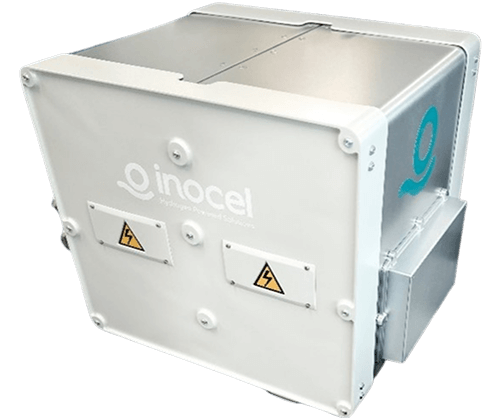
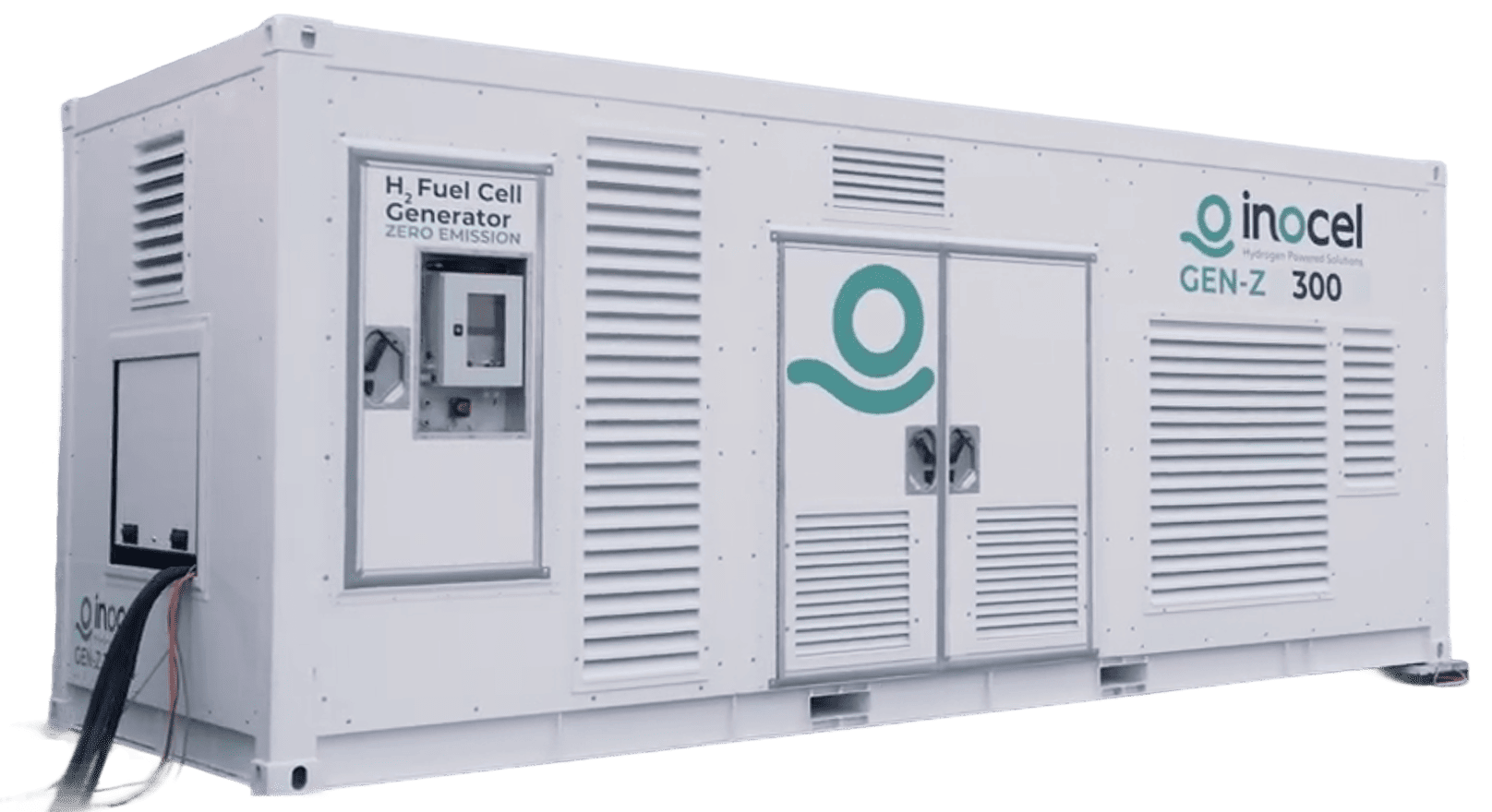
The INOCEL generator converts hydrogen into electricity via a fuel cell. In this process, hydrogen and oxygen react electrochemically to produce electricity, water and heat. No combustion takes place.
That is a key difference compared with generators running on HVO100 or biogas.
These alternative fuels are also burnt and therefore cause local emissions, including nitrogen oxides. When electricity is generated using a hydrogen generator, no CO₂ or NOₓ emissions result from combustion at the point of use.
The applied INOCEL GEN-Z300 delivers 200 kW of continuous electrical power.
As long as there is sufficient hydrogen available, the generator can continue to produce electricity for an extended period.
From 200 kVA available to approximately 400 kVA required
In one of the projects, on site there are approximately 200 kVA of grid power available, whilst the use of the buildings accounts for approximately 400 kVA nodig is. Een zwaardere netaansluiting is voorlopig niet beschikbaar. Electroproject heeft hiervoor een tijdelijk Smart Microgrid uitgewerkt met two hydrogen generators, each with a capacity of 200 kW, a BESS with a capacity of 2,000 kWh / 400 kW and a Power Management System (PMS).
The battery provides support during power peaks and rapid changes in load. The hydrogen generators produceren gedurende langere tijd het aanvullende vermogen dat vanuit het elektriciteitsnet ontbreekt. Zodra de netverzwaring beschikbaar komt, kan het Smart Microgrid worden verplaatst en op een andere locatie opnieuw worden ingezet.
Getting started anyway, even though a mains connection is still years away
In the case of a second project, no standard mains connection is available at all. The final connection is not expected until mid-2028 completed, whilst construction and commissioning will begin much earlier.
First phase
In the first phase, approximately 150 to 200 kW power required, with peaks of up to approximately 250 kW.
Later
Later, the figure rises to around 250 kW, with peaks of up to approximately 500 kW.
Here too, battery storage and hydrogen complement each other. The BESS absorbs power peaks, whilst the hydrogen generator produces the required electricity over longer periods. This means the site does not have to wait for the final grid connection before it can start operating.
For this transitional period, Electroproject has developed a Smart Microgrid with a 200 kW hydrogen generator, two BESS systems, each with a capacity of 366 kWh / 160 kVA and PMS control.
New options in the event of grid congestion
Een BESS en een waterstofgenerator vervullen binnen een Smart Microgrid verschillende functies. Een batterij slaat energie op en kan deze snel beschikbaar stellen. Een waterstofgenerator produceert daarentegen nieuwe elektriciteit zolang waterstof beschikbaar is.
It is precisely when a limited grid connection is unable to supply sufficient energy to meet the power demand over a longer period that this combination can become an attractive option.
Hydrogen is therefore not a one-size-fits-all solution to every grid congestion problem. However, when insufficient grid capacity, a long-term need for additional generation capacity and restrictions on local emissions all come together, a hydrogen generator offers possibilities that other solutions do not always provide.
Met de toevoeging van waterstof kan Electroproject Smart Microgrids nu samenstellen uit onder andere netcapaciteit, BESS, lokale duurzame opwek, waterstofgeneratoren en intelligent vermogensmanagement. Zo kan voor ieder energievraagstuk worden gezocht naar de combinatie die technisch en praktisch het beste past.
Discover the possibilities for your organisation
Loopt uw organisatie tegen de grenzen van de netaansluiting aan, duurt een nieuwe aansluiting nog jaren of beperken emissie-eisen de mogelijkheden voor tijdelijke energieopwekking? Neem contact op met Electroproject. We onderzoeken welke Smart Microgrid-oplossing bij uw situatie past.
- We will contact you within 48 hours on working days