
Static UPS systems from Riello UPS
Reliable power security for mission-critical environments
Instant protection in case of power failure and voltage spikes
Stable, clean power prevents data loss of critical equipment
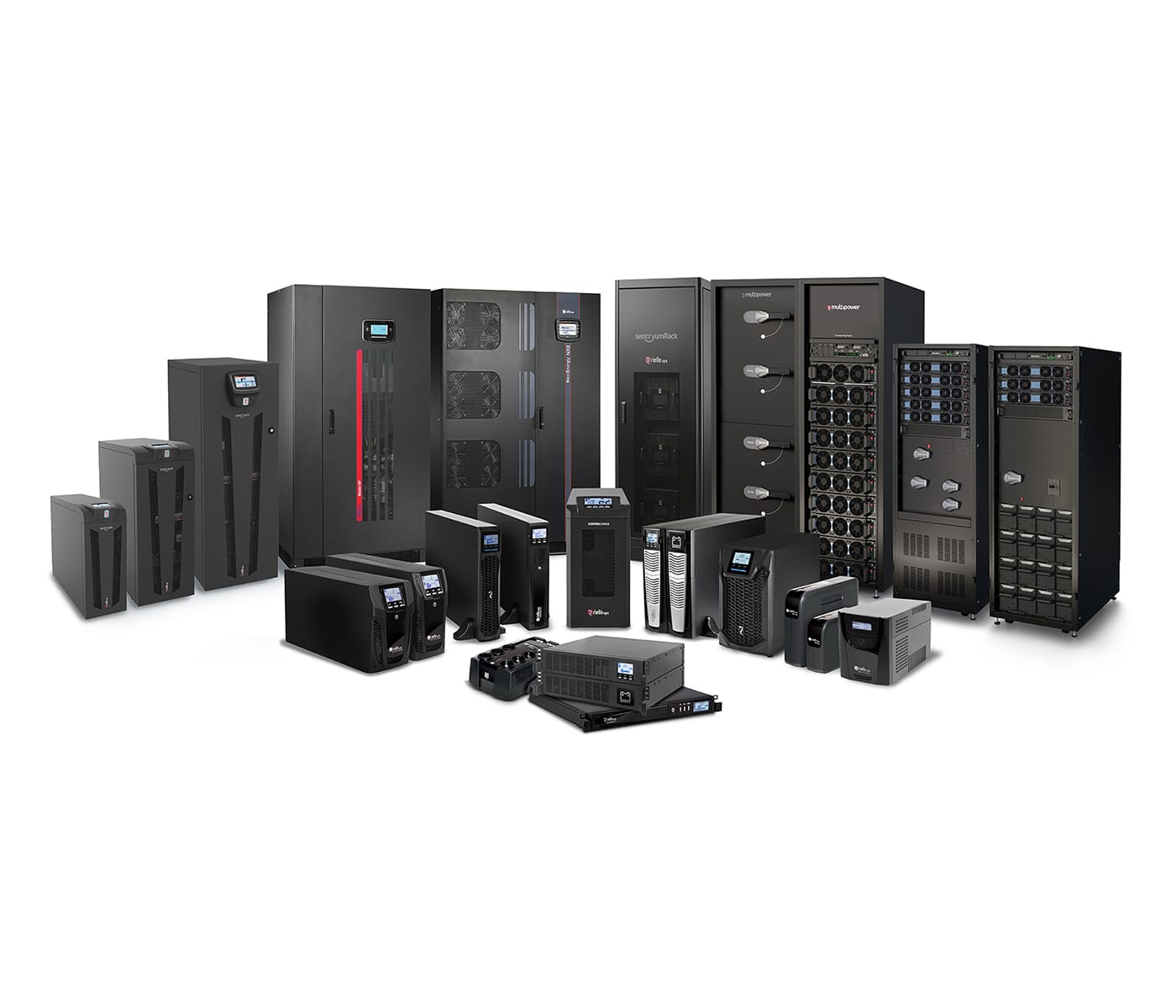
400 VA to 6.4 MVA: certified UPS solutions for every application
Home " Specialisms " Smart Energy Systems " Static UPS systems
A stable energy supply is not a luxury but a prerequisite for continuity
With static UPS systems from Riello Electroproject offers high-quality solutions for organisations where power grid outages, voltage variations or quality problems have a direct impact on processes, data and people.
What is a static UPS system?
A static UPS (Un-interruptible Power Supply) system is an electronic emergency power supply that continuously provides clean, stable power to connected systems.
In case of voltage variations or complete power failure, the UPS takes over power immediately and without interruption via battery storage. For connected systems, nothing changes.
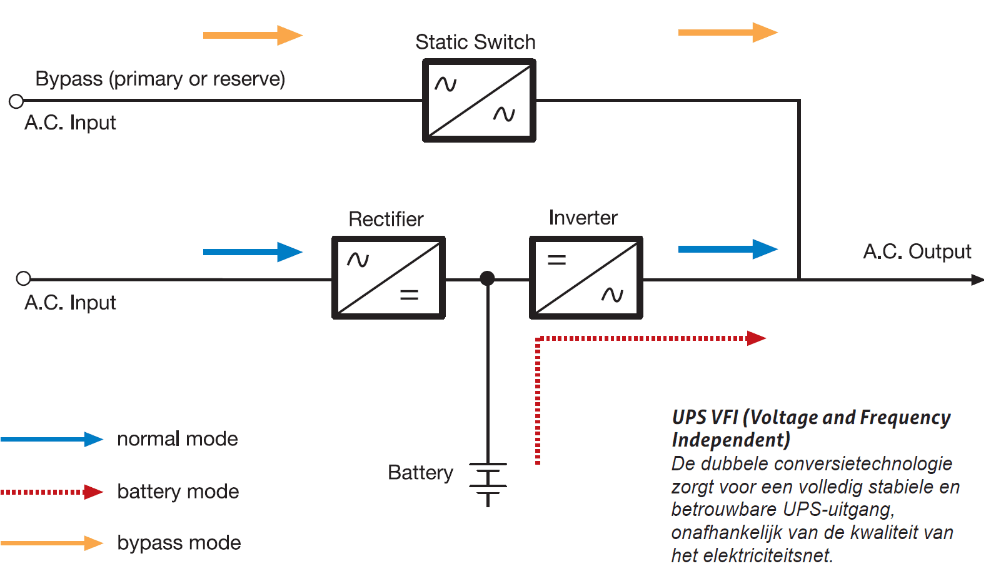
Static UPS systems operate on the principle of online double conversion:
- incoming mains voltage is converted continuously (AC → DC → AC)
- connected equipment is completely isolated from mains contamination and harmonics
- no change in output voltage in case of mains power failure
The result: maximum protection against outages, dips, spikes and grid disturbances.
Applications of a static UPS system
Static UPS systems are deployed in environments where mains power failure or grid instability directly affects processes, data or safety.
Typical applications are:
- IT infrastructure: servers, storage and data centres
- Network and security systems
- Healthcare institutions: medical IT, diagnostics and laboratories
- Offices and business environments
- Industrial automation and control (PLC / SCADA)
Especially in sectors where digital continuity is crucial, a static UPS is the first line of defence.
What makes a static UPS system different from a dynamic UPS system?
The difference between a static and dynamic UPS system is mainly in technology, scale and scope.
| Static UPS systems | Dynamic UPS systems |
|---|---|
| Energy storage using batteries (lead-acid/lithium (LFP)/nickel-zinc/supercapacitors) | Energy storage via flywheel |
| Fully electronic, suitable for both low and high power outputs up to 6.4 MW, for short and long operating times | Often coupled to an emergency power generator |
| Very fast and stable response | Especially suitable for high powers |
| Compact, modular and flexible | Larger and more complex in installation |
Advantages of a static UPS system for your digital infrastructure
Riello has been developing UPS systems for mission-critical applications for decades. This is reflected in practice.
- Maximum reliability - Complete isolation from the mains and 0 ms interruption in case of failure.
- Excellent power quality - Very low harmonic distortion, suitable for sensitive IT and medical equipment.
- High efficiency - Less energy loss, lower cooling load and lower operating costs.
- Flexibility and scalability - Suitable for growing environments and redundant configurations (N+1).
Flexible UPS solutions from Riello UPS — from compact to mission-critical
Riello UPS offers a comprehensive range of static UPS systems that enable organisations to tailor their power supply precisely to their capacity, criticality and future growth. Within this range, there are three powerful solutions, each designed for a specific scale and application.
Riello UPS Sentryum (10–120 kVA/kW)
Compact, efficient and ideal for smaller mission-critical environments
The Riello Sentryum is designed for small to medium-sized environments where continuity is essential - such as server rooms, healthcare facilities and office environments. Thanks to its transformerless design, high energy efficiency and choice of multiple enclosure variants (CPT, ACT and XTD), Sentryum offers maximum flexibility. This makes the system particularly suitable when space saving, low energy consumption and adaptability are key.
RIELLO UPS MultiPower2 (15 kW–6.4 MW)
Rugged UPS for heavy IT infrastructures and data centre environments
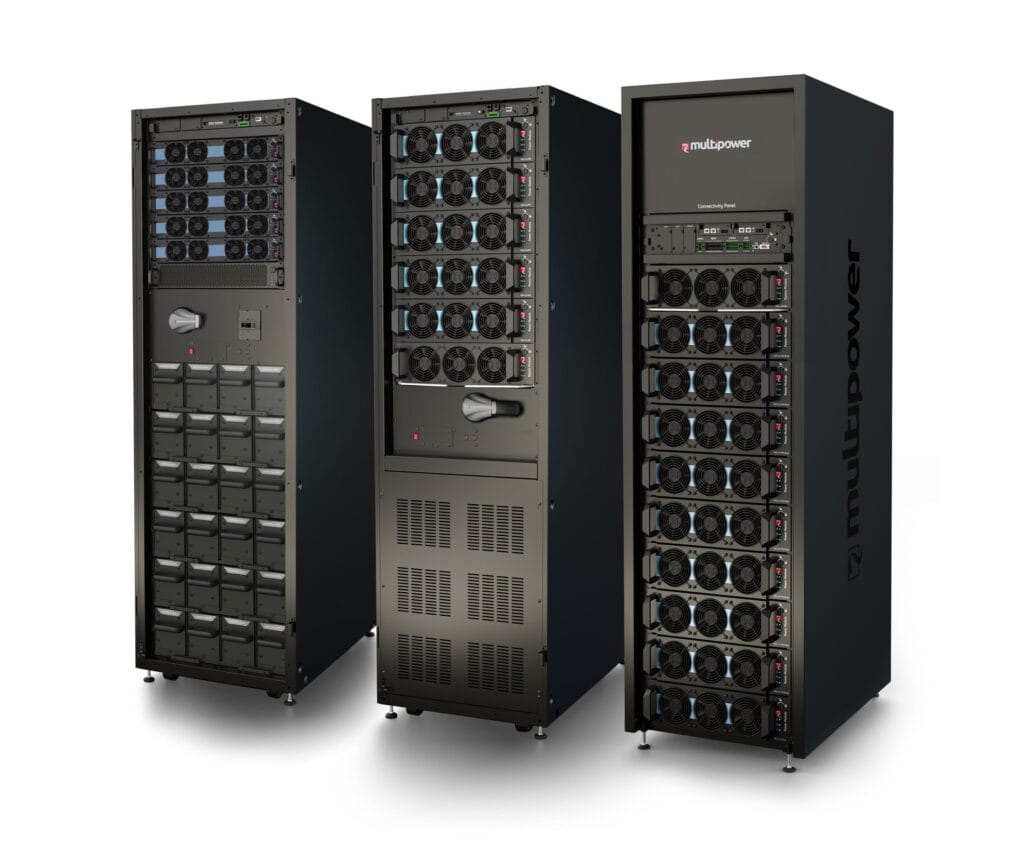
Multi Power2 is a modular UPS range with high power density, developed for critical applications where efficiency, scalability and availability are key.
The use of IGBTs as SiC (silicon carbide) semiconductor technology in the power modules results in very high efficiency (>98.1%), with lower heat generation and greater overall system reliability.
The UPS utilises a fully modular architecture in which the power modules, bypass and control unit are redundant and hot-swappable.
This allows the system to be precisely tailored to the current load, enables N+X redundancy to be implemented and avoids oversizing, resulting in a favourable TCO.
With high-density power modules, Multi Power2 delivers up to 600 kW per UPS cabinet, and up to 3,600 kW when up to six systems are operated in parallel.
For applications with higher power requirements, M2S systems are available, which can operate with up to four cabinets in parallel, thereby achieving a total power output of up to 6,400 kW.
Riello UPS NextEnergy (250–800 kVA)
The scalable high-end UPS for mission-critical applications
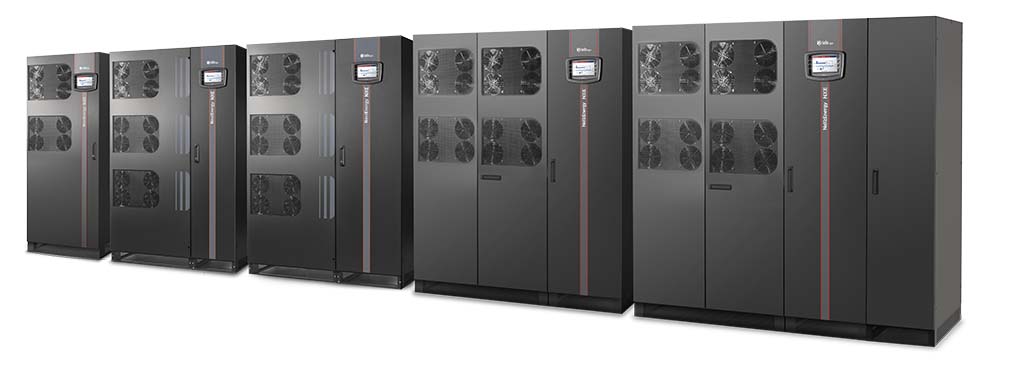
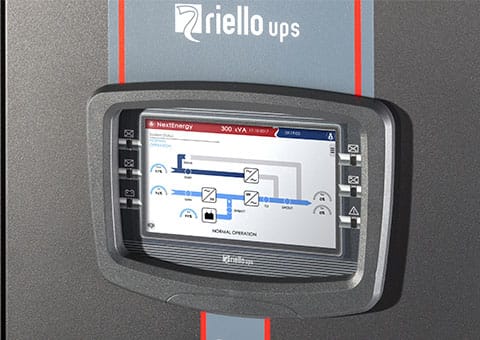
At the top of the portfolio is Riello NextEnergy: a fully scalable solution for mission-critical environments such as data centres and industrial plants. NextEnergy is designed for maximum efficiency, fault tolerance and future-proofing. The system supports modern energy features such as lithium-ion batteries, peak shaving and smart-grid integration, ensuring that organisations are optimally prepared for future infrastructure requirements.
Which battery technology should be used with the UPS?
Valve-regulated lead-acid batteries (VRLA)
Sealed valve-regulated lead-acid (VRLA) batteries offer lower purchase costs and require less maintenance than flooded designs, but have a shorter service life. VRLA products used with UPS systems are usually Absorbed Glass Mat (AGM) batteries. They contain a special porous glass fibre mat between the positive and negative plates which absorbs the acid.
VRLA batteries are sealed within a casing fitted with a valve that releases gas if the internal pressure becomes too high. As they are sealed, they can be installed either vertically or horizontally, allowing for flexible use.
Lithium-ion batteries
As well as lead, other materials are also used in UPS batteries. Nickel-cadmium (NiCd) was popular in the telecoms sector, but it is expensive and contains toxic substances. Lithium-ion batteries (Li-ion) are widely used in electronics and electric vehicles. The growth of the EV market has driven down costs, making them an attractive option for UPS applications and energy storage as well.
Li-ion offers the same power density as VRLA in less than half the space, has up to 50 times as many charge cycles and performs well at high temperatures. Due to its high energy density and complexity, an advanced Battery Management System (BMS) is essential for safe operation. The BMS monitors and balances each cell and predicts the battery’s health and ageing.
Despite lower production costs, the raw materials for lithium-ion batteries are more expensive than lead. Their longer service life reduces the total cost of ownership (TCO) and supports sustainability goals, but the environmental impact of production and recycling must be taken into account. The recycling of lithium-ion batteries is not yet as advanced as that of lead-acid batteries.
Nickel-zinc (NiZn) batteries
Nickel-Zinc (NiZn) UPS batteries deliver instant power in a compact form factor, with high discharge performance and a safety profile that prevents thermal runaway. Unlike VRLA batteries, where replacement is often considered best practice after just a few years in practice (3–4 years for 5-year types; 7–8 years for 10-year types), NiZn can significantly extend the replacement cycle whilst simultaneously minimising operational risks and maintenance interventions. Compared with lithium-ion, NiZn is particularly attractive when safety, retrofit feasibility and high-rate UPS power are the top priorities.
In the UPS world, NiZn is often described as potentially more expensive in terms of CAPEX and €/kWh than certain lithium-ion chemistries (notably LMO/NMC), depending on the manufacturer and system design.
One consistent platform for power security
Together, these three UPS solutions form a comprehensive and consistent Riello UPS platform. From compact installations to large-scale critical infrastructures: Riello UPS provides reliable power protection for any environment. Wondering which model is best suited to your situation? We’d be happy to advise you.
Electroproject supervises the entire process
Riello UPS systems are designed for easy integration into existing electrical infrastructures. Our experts will work closely with you to design a UPS system that perfectly suits your specific situation, needs and budget.
- Inventory of critical systems and loads
- Correct dimensioning and configuration
- Professional installation and commissioning
- Monitoring and maintenance
Want to know more?
Fill in the contact form and find out how a static UPS system can help your business protect your systems from power outages and voltage variations.
Contact us without obligation
Wondering what we can do for you? Then contact our specialist Marcel Eijgermans without obligation!
- We will contact you within 48 hours on working days
Related topics
Smart Microgrid
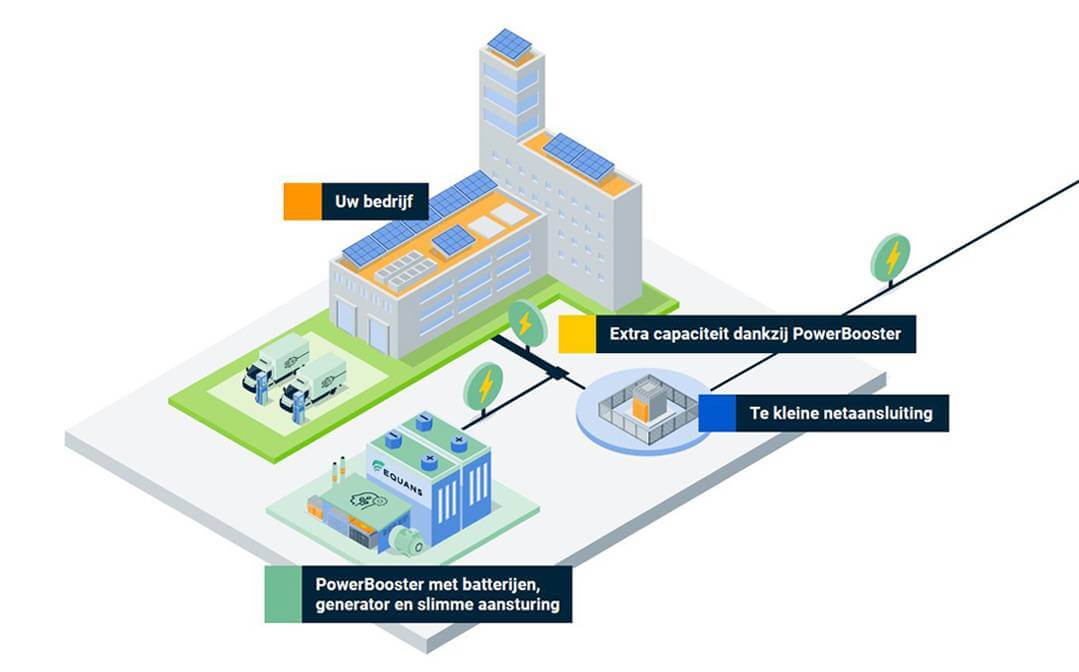
A Smart Microgrid is an intelligent energy system specifically designed to eliminate grid congestion.
Grid congestion
Grid congestion occurs when the demand for electricity exceeds the capacity of the electricity grid.
Flywheel UPS
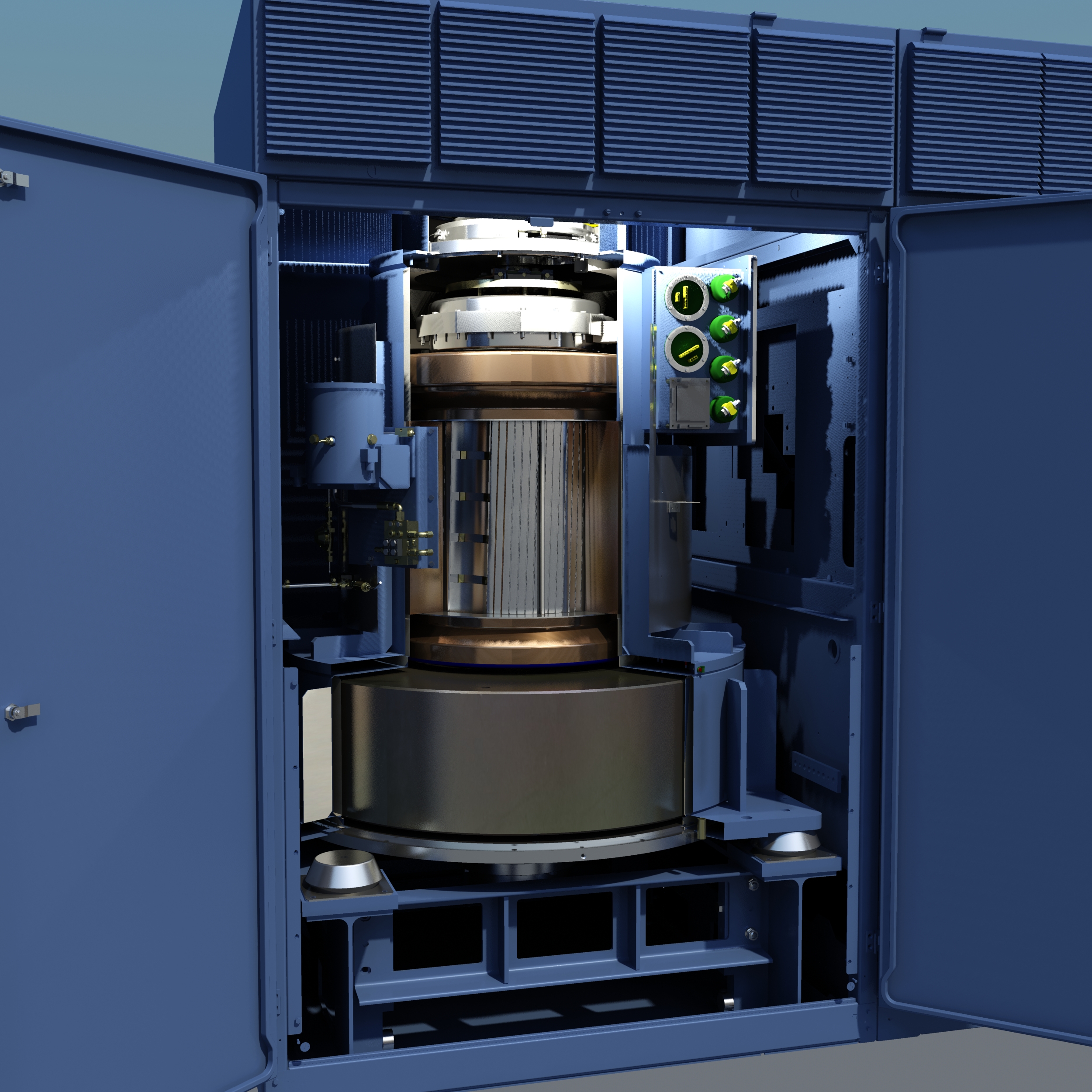
To ensure optimum grid quality and protect your business processes from power cuts and voltage dips,...