Battery Energy Storage Systems (BESS)

Better control over your consumption and costs

Temporary increase in capacity without upgrading the grid
Improved grid stability and power quality
Modular and scalable up to 5 MW

Flexible energy storage for greater control over your energy consumption and costs

A Battery Energy Storage System (BESS) enables businesses to manage their energy consumption intelligently: by storing electricity when it is cheap or readily available, and releasing it when demand (and prices) rise. The result: lower energy costs, reduced strain on the grid and greater autonomy.

What is a BESS?

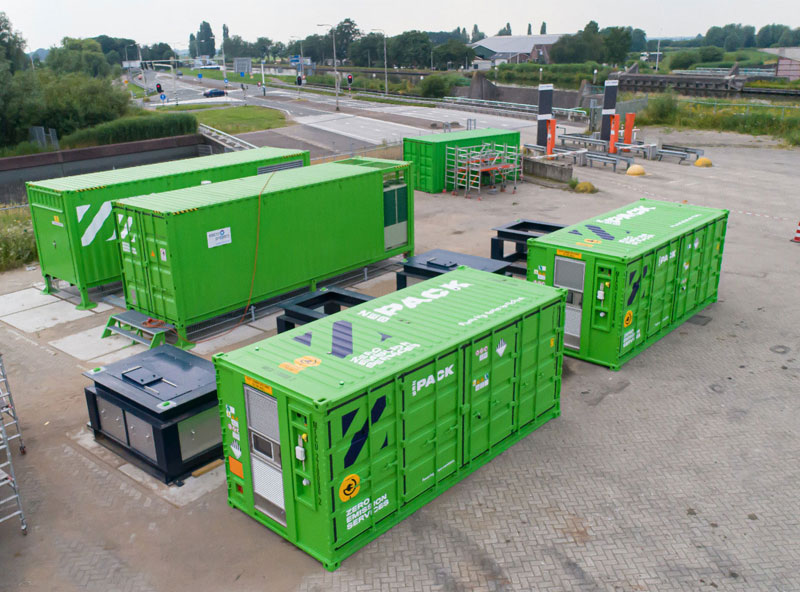
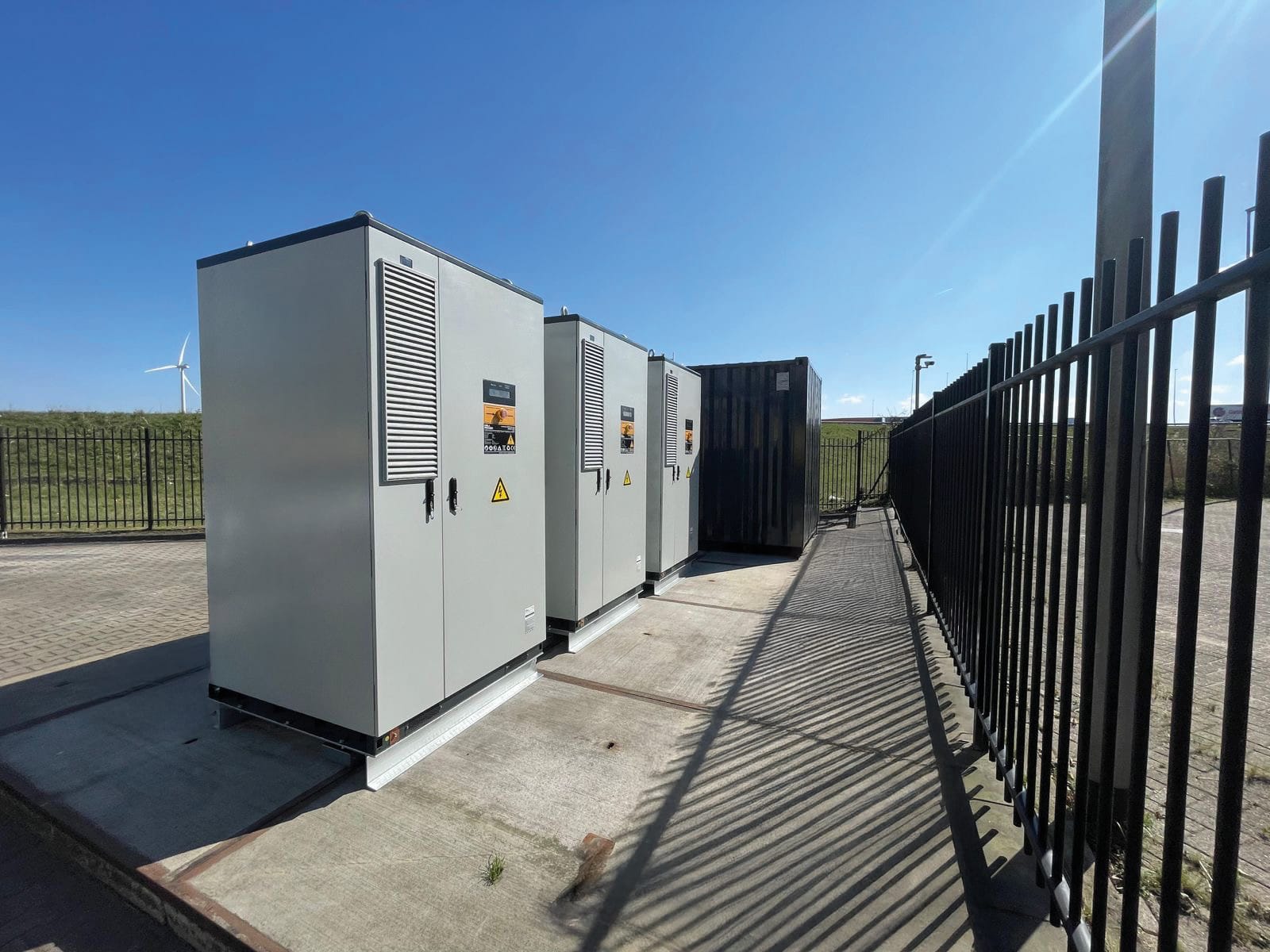
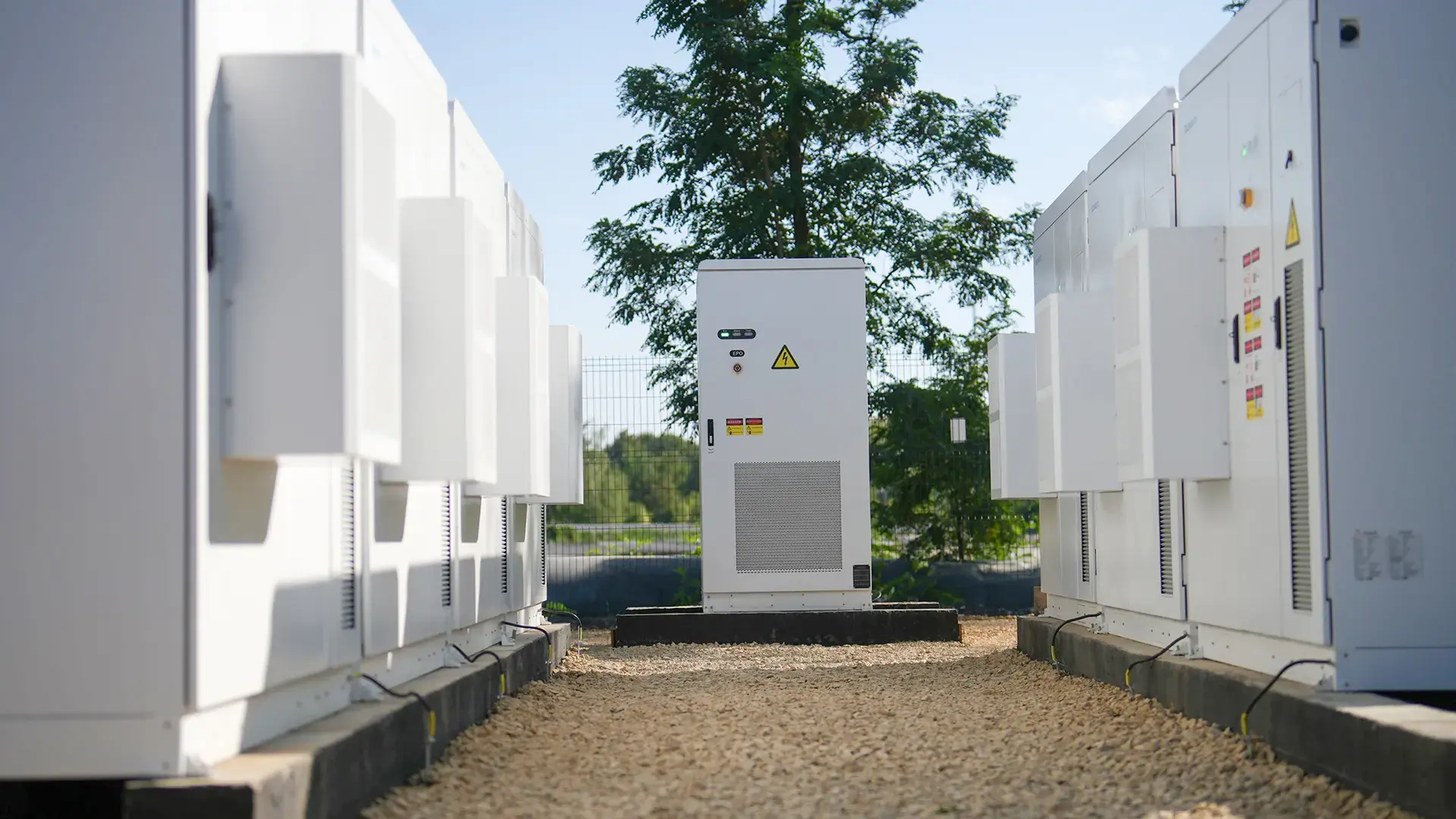
A BESS is an advanced system that stores electrical energy in batteries for later use. It consists of several components, including lithium-ion batteries, power electronics (such as inverters and distributors) and an energy management system (EMS).

BESS solutions are scalable and modular, and can be used either as standalone systems or in combination with other energy systems such as solar panels, charging points or an emergency power supply.

Applications of BESS

The applications of a BESS are wide-ranging. Here are some common use cases:

  • Peak shaving: smoothing out peak demand to keep the grid connection smaller (and cheaper).
  • Load shifting: store energy when rates are low and use it when rates are high.
  • Grid independence: when combined with solar energy, a BESS can help businesses to operate (partly) independently of the grid.
  • Frequency control (FCR): For large-scale systems, it is possible to participate in grid balancing services and generate additional revenue from this.

What makes a BESS different from a UPS?

Although both systems store energy, they differ fundamentally in their purpose and design

UPS (Uninterruptible Power Supply)BESS (Battery Energy Storage System)
Focused on emergency power in the event of a power cutFocused on energy management and cost optimisation
Very short bridging time (seconds to minutes)Long duration of use (up to several hours)
Always active, always on standbyCan be deployed flexibly based on tariff, demand and/or grid load
No smart energy management systemIntegrated with EMS for smart control and optimisation

A BESS can therefore be a strategic component of the energy infrastructure.

Benefits of a BESS for business customers

For large-scale consumers in logistics, industry, property or public infrastructure, a BESS offers significant benefits:

  • Cost reduction through peak shaving and load shifting
  • Increasing capacity without requiring a higher-rated grid connection
  • Improved grid stability and power quality
  • Future-proofing in or near zero-emission zones and/or the electrification of processes
  • Additional income from energy markets (such as FCR)
  • Support with sustainability targets and ESG reporting

Integrating a BESS

Integrating a BESS into existing infrastructure requires bespoke technical solutions. Electroproject oversees the entire process:

  1. Initial consultation and feasibility study
  2. Selection and sizing of the system
  3. Engineering and network analysis (if required)
  4. Installation and commissioning
  5. Integration with an EMS or building management system

Our specialists ensure a safe and certified connection that meets all the network operator’s requirements.

Maintenance of a BESS

A BESS has relatively few moving parts, but it does require critical maintenance:

  • Monitoring battery health
  • Regular software updates for the EMS
  • Inspection of temperature control/cooling systems and inverters
  • Preventive checks on connections and security

Electroproject offers bespoke maintenance contracts, including 24/7 monitoring and remote support.

Costs, investment and maintenance

The cost of a BESS depends largely on its power output (kW) and storage capacity (kWh), as well as on the required features (such as FCR integration or black start capability).

The payback period is usually between 4 and 7 years, depending on energy prices, grid costs and subsidies. Electroproject can help draw up a business case and, if required, offer leasing or ESCO models.
Sustainability and environmental requirements

A BESS makes a direct contribution to reducing CO₂ emissions by lowering peak demand and making optimal use of renewable energy.

Furthermore, modern battery systems meet strict environmental requirements:

  • Recyclability of battery cells up to 90%
  • No lead or cadmium in lithium-ion batteries
  • Complies with CE marking, UN 38.3 and IEC standards

Electroproject works exclusively with manufacturers who can demonstrate that they produce sustainably and are transparent about their supply chain.
Frequently asked questions

A Battery Energy Storage System (BESS) helps businesses reduce peak loads on the electricity grid by using temporarily stored energy during periods of high electricity consumption. This process is also known as peak shaving.

When machines, charging points, HVAC systems or production processes all require a lot of power at the same time, this results in a spike in energy consumption. A BESS can immediately supply additional power at that moment, thereby reducing the amount of power required from the grid connection.

This enables companies to:

  • avoid higher transport costs;
  • remain within the contracted connection capacity;
  • expand without the need for immediate network upgrades;
  • better management of grid congestion.

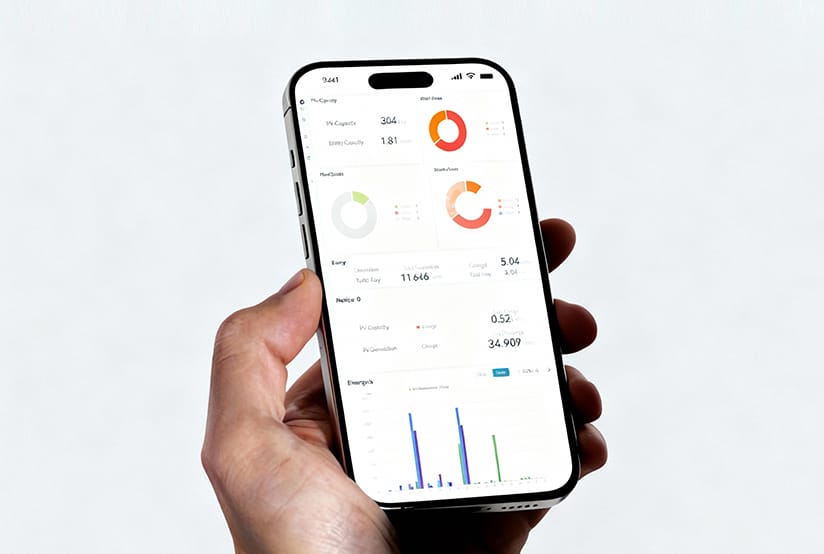
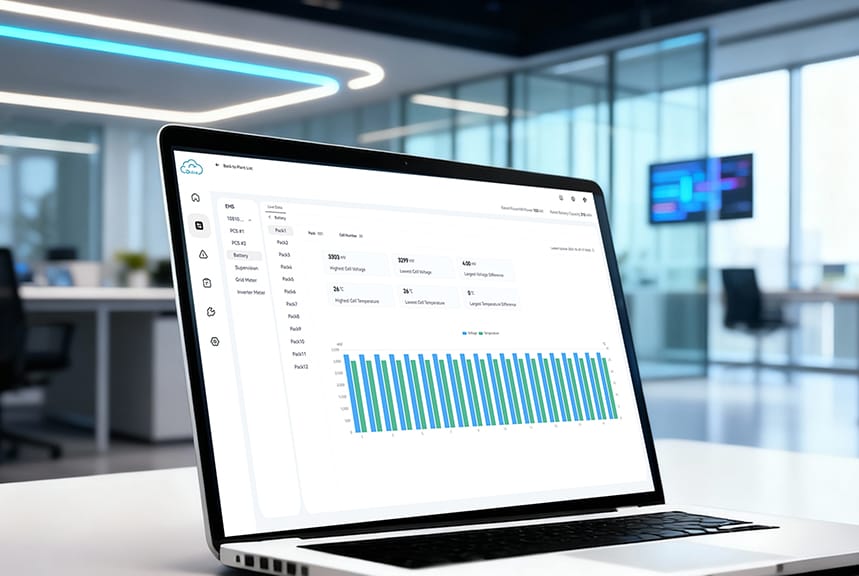
A BESS is often controlled by an Energy Management System (EMS), which provides real-time insight into energy consumption, generation and the load on the connection. This enables the system to automatically store or release energy at the most efficient times.

The cost of a battery energy storage system depends on several factors, including:

  • the required power (kW or MW);
  • the storage capacity (kWh or MWh);
  • the application;
  • integration with existing systems;
  • the necessary security and cooling systems.

In addition to the initial investment, companies need to take the following into account:

  • engineering and installation;
  • connection to the electrical infrastructure;
  • maintenance and monitoring;
  • software and EMS integration;
  • any necessary permits or grid studies.

For industrial applications, the investment typically ranges from tens of thousands of euros to hundreds of thousands or even millions of euros for large-scale systems.

The payback period is often between 4 and 7 years. This depends on:

  • energy tariffs;
  • peak load;
  • network costs;
  • use for energy trading or FCR;
  • available grants or tax schemes.

A BESS helps businesses reduce their energy costs by storing and using energy more efficiently. The system stores electricity when demand is low or electricity prices are favourable, and feeds this energy back into the grid during peak periods or when tariffs are high.


The main ways in which a BESS reduces costs:

  • peak shaving: reducing peak demand and transmission costs;
  • load shifting: using energy at times when it is cost-effective;
  • optimisation of in-house solar energy;
  • reducing feed-in losses;
  • preventing network congestion;
  • participation in energy markets such as FCR.

For businesses with high and fluctuating energy consumption, a BESS can help make energy costs more predictable and ensure better utilisation of the existing grid connection.

Industrial BESS installations must meet strict safety and environmental requirements. This is important due to the high energy density of lithium-ion batteries and the role the system plays within the electrical infrastructure.


Key points to note are:

  • fire detection and fire compartmentation;
  • temperature monitoring and active cooling;
  • emergency stop devices;
  • ventilation and flue gas extraction;
  • monitoring of battery status and performance;
  • safe installation and accessibility.


In addition, various standards and guidelines apply, including:

  • CE marking;
  • IEC standards;
  • UN 38.3 for the transport of batteries;
  • guidelines issued by insurers and safety authorities;
  • requirements of network operators.


Modern BESS systems are equipped with comprehensive Battery Management Systems (BMS) that continuously monitor the temperature, state of charge and safety of the battery cells. Sustainability also plays an important role. Many modern battery systems are largely recyclable and designed for a long service life.

A BESS is often combined with solar panels and EV charging points to make more efficient use of locally generated energy.

During the day, surplus solar energy can be stored in the battery system rather than being fed directly back into the grid. This stored energy can be used later:

  • for charging electric vehicles;
  • during peak demand;
  • outdoor sunshine hours;
  • or when energy prices are high.

By integrating a BESS smartly with charging infrastructure, the following is achieved:

  • less strain on the mains connection;
  • more available loading capacity;
  • better use of solar energy;
  • lower energy costs;
  • less reliance on grid reinforcement.

An Energy Management System (EMS) ensures that solar panels, charging points and battery storage work together optimally based on demand, generation and energy prices.

A Battery Energy Storage System (BESS) can help organisations that are unable to obtain the desired capacity from their network operator due to grid congestion. In many regions, the electricity grid is overloaded, meaning that businesses are unable to secure a higher-capacity grid connection or find themselves on a waiting list for years.

In such cases, a BESS offers a practical solution by temporarily providing additional power from locally stored energy.

The system acts as an energy buffer:

  • the battery is charged during periods of low consumption or when solar energy is available;
  • During peak periods, the BESS supplies additional power to the system.

This means that not all the energy needs to be supplied from the grid at the same time.

In practical terms, this means that companies:

  • electric vehicles can be charged without a higher-voltage mains connection;
  • expand production processes within the existing grid capacity;
  • can cope with peak demand;
  • accelerate sustainability projects;
  • become less dependent on constraints on the electricity grid.

A BESS does not, therefore, literally increase the capacity of the grid connection, but makes smarter use of the available capacity. In practice, this results in more usable power for the organisation.

When combined with an Energy Management System (EMS), a BESS can automatically respond to:

  • energy consumption;
  • peak load;
  • solar power generation;
  • dynamic energy tariffs;
  • load on the mains connection.

This means that, despite grid congestion, businesses can continue to grow, electrify their operations and become more sustainable without being directly dependent on the expansion of the electricity grid.

Curious to find out what a BESS can do for your organisation?

Book a no-obligation consultation with our experts. We’d be happy to help you find the best configuration for your situation.

Contact us without obligation

Wondering what we can do for you? Then contact our specialist Marcel Eijgermans without obligation!

Related topics

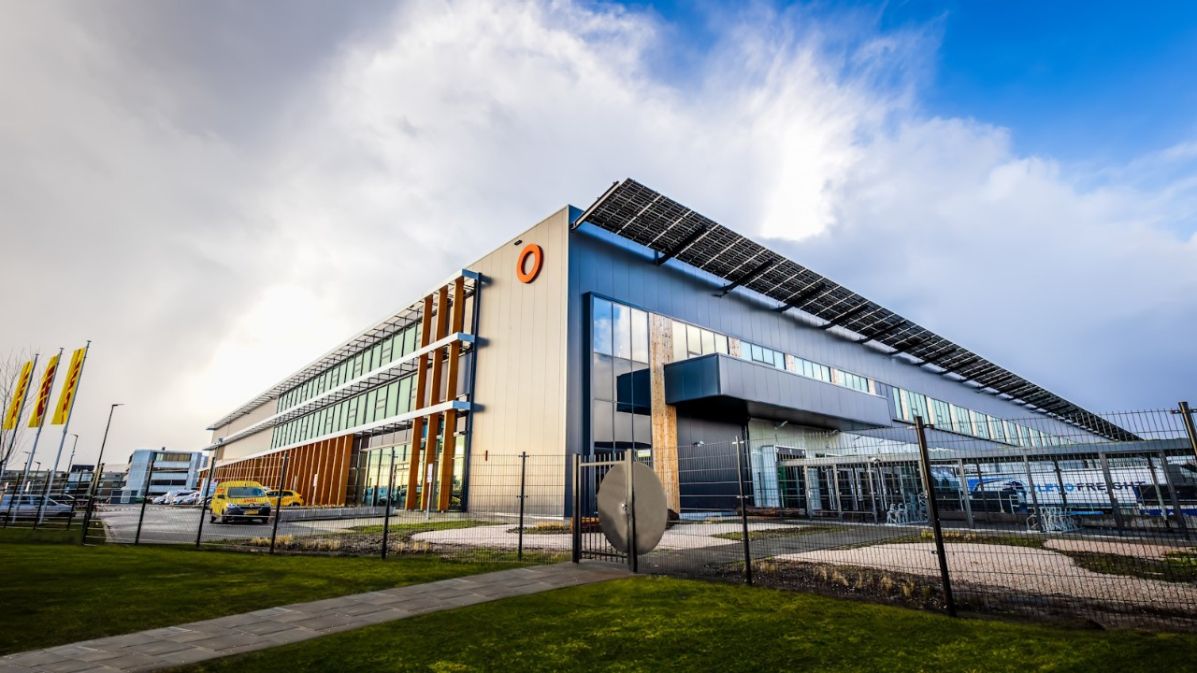
Customer case: SEGRO - DHL Global Forwarding

With a Smart Microgrid, DHL operates completely independently of the national grid.

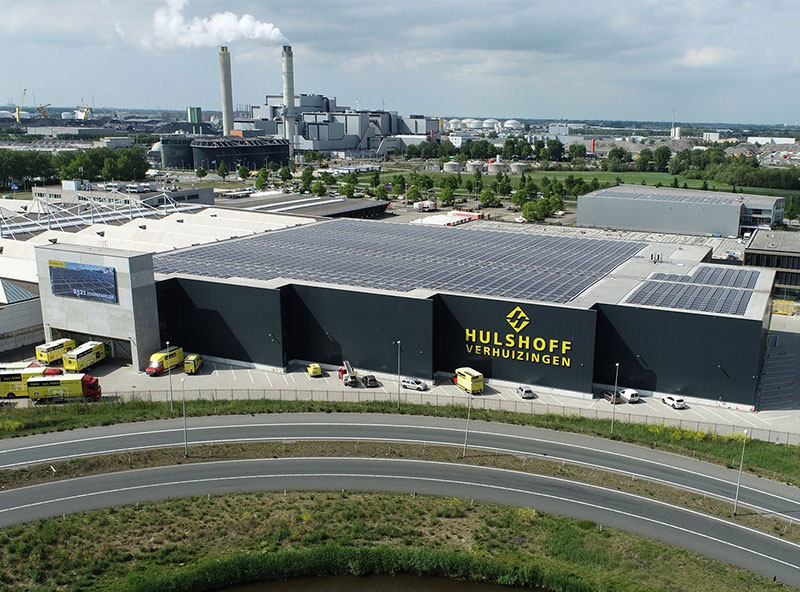
Customer case: Hulshoff Removals

Fully equipped for sustainable logistics in zero-emission zones with 3,100 solar panels (868 kWp).

Customer case study: Zero Emission Services

Zero-emission inland shipping made possible by our charging solutions.

Scroll to Top